A proactive approach to conflicts to prevent bullying: because conflict teaches but bullying does damage

At our small Montessori-based school, we interact daily with the emotions, interests, and social behaviours of children aged 3 to 12. This natural and enriching coexistence also brings with it disagreements, frustrations, friction, and conflicts, which are all part of social learning. However, today we see a growing concern among many families, in all schools, who fear that their children may be involved in any argument, isolated insult or shove and that this may be ‘bullying’, when in fact many of these more frequent behaviours can be part of normal development, especially when we talk about the infant stage and the first years of primary school.
The 2024 Annual Report of the Andalusian Ombudsman on bullying in schools already warned that many families ‘confuse’ sporadic episodes of conflicts in school life with bullying and that, therefore, intervention should take the form of educational measures, sometimes through the school’s coexistence plan, and not always through sanctions.

We feel necessary to provide clarity, based on evidence, pedagogical experience, neuroscience and official definitions, to differentiate between developmental conflict or isolated aggression and what constitutes bullying. Furthermore, we must explain how we act in our centre to prevent, detect and support each situation.
What is normal for their age and what is not: this distinction is important and it is important to know that children are learning to interact with others, learning peaceful conflict resolution and learning what assertiveness and empathy are and, above all, how our behaviour affects others. Therefore, situations of disagreement or frustration may arise that lead to unpleasant situations for everyone.

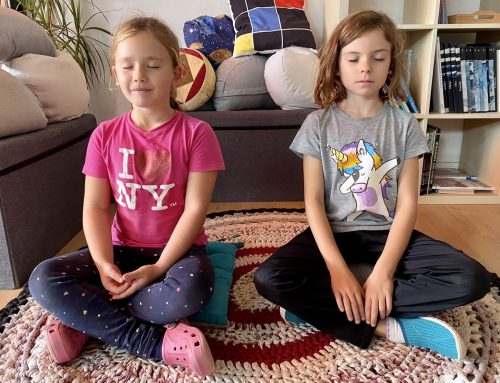
Neuroscientist Sarah-Jayne Blakemore insists that the child and adolescent brain is in a ‘social testing laboratory’ and indicates that children need to experience conflict to learn social skills. The development of the prefrontal lobe (self-control, empathy, planning) continues until the age of 20-25. Therefore, trying to ensure that children ‘never have problems’ is not only impossible, but counterproductive; without real practice, they will not develop the social resilience necessary for adulthood. She also suggests not forgetting the benefits of resources such as meditation to promote behavioural inhibition and empathy.
In early childhood education (ages 2–6), the brain is still maturing in terms of impulse control and empathy, and the following behaviours may be normal:
- Frequent disputes over objects (‘I had it first,’ ‘I saw it first’).
- Impulsive behaviours: pushing, pulling arms, shouting, hitting.
- Difficulty waiting for turns or sharing.
- Intense emotional expressions.
What would NOT be normal would be:
- Repeated behaviour always directed at the same child.
- Systematic exclusion (“you can’t play” over and over).
- Clear intention to hurt or humiliate (although rare at this age).
In primary school (ages 6–12), as children progress through the grades, new conflicts may arise:
- Occasional insults (“stupid”, “annoying”).
- Isolated teasing.
- Occasional tripping in a moment of anger.
- Laughter when someone makes a mistake.
- Desire to belong that causes friction within groups.
This is to be expected if it is not directed at the same person, repeated, sustained or deliberate.
What is NOT normal would be:
- Intentional and sustained isolation (‘no one sits with you’).
- Repeated insults directed at the same person.
- Recurring physical harm.
- Spreading rumours to damage someone’s image.

It is very important to differentiate between conflict and bullying. Javier Urra argues that it is essential to understand this difference, because today there is a risk of labelling situations as bullying that are not, which, as David Pastor Vico (philosopher) warns in his book ‘The Age of Idiots’, can lead us to overprotect children from any friction, limiting their capacity for resilience and social learning and, at the same time, neglecting really serious problems.
According to AEPAE, the Spanish Association for the Prevention of Bullying, bullying involves: Intent to cause harm (physical, verbal or emotional), repetition over time, imbalance of power (physical strength, popularity, age, group) and the victim’s inability to defend themselves. If any of these elements are missing, it is not bullying, but another type of conflict that must be monitored and addressed but not incorrectly labelled.
Constant prevention must be the first tool against any violent action and, of course, many others must be used, including clearly defined official protocols.
Although no educational centre can be considered risk-free, the structure of Montessori centres, such as our school, puts us in a somewhat more favourable position in terms of prevention and, above all, the possibility of a very low incidence of bullying for the following reasons:

- Schools (in general, although not all) are smaller in terms of student numbers, with many accompanying adults and few pupils. This significantly reduces the risk of bullying as it allows for greater supervision (adults observe interactions almost constantly).
- Less anonymity: in small groups, it is very difficult to sustain abusive dynamics without being seen.
- Deep relationships: we know each child well, their emotional needs, their ways of relating to others and their behavioural changes.
- Group cohesion: small groups tend to generate more stable and secure bonds.
Furthermore, as it is a teaching method that incorporates protective factors, it promotes healthier relationships:
- Education for Peace, as a key principle and meaning of the teaching method.
- Promotion of emotional autonomy and self-regulation.
- Use of non-violent communication and mutual respect.
- Cooperative, non-competitive environments.
- Multi-level groups where older children care for and guide younger ones.
- Continuous observation by adults.
All of this creates, in general, a better school environment. Even so, prevention is mandatory and essential. For this reason, at our centre we combine numerous prevention activities and actions that are clearly defined in our centre policies:
- Constant mediation by educators.
- Daily emotional support.
- Win-win conflict resolution practices.
- Non-violent communication.
- Official protocols for coexistence and child protection.
- We implement protocols, a Coexistence Plan and mediation.
- Emotional education and coexistence with regular sessions, workshops and self-regulation routines.
- Meditation and daily assemblies at all levels.
- We raise social awareness: activities, related stories, etc.
- Clear, secure communication channels for students: Anonymous mailbox to detect hidden situations (although in a small centre it is rarely used because children know they can easily turn to adults and when they do, they usually give their names).
- Staff training: The teaching team updates its knowledge on coexistence, child development, neuroscience, protocols, bullying, children’s rights, preventive tools, etc.
- Close collaboration with families: We inform them when necessary to reinforce reflection and reparation at home.

Although our school presents a low risk due to its structure and methodology, bullying is a real problem in Spain with very clear statistics, therefore, it is possible in any school and this makes us aware that we must remain vigilant, not let our guard down and not normalise violence.
Nor can we forget that preventing bullying is a shared responsibility between society in general, educational centres and, of course, the indisputable role of the family.
The primary educational agent is the family, which must teach respect. The school accompanies, educates and cares for children, without forgetting that values are mainly learned at home. Respect begins at home, and empathy is modelled in family life. That is why the various annual reports on bullying always highlight the importance of family involvement in prevention efforts. The ability to apologise is learned by observing adults’ kindness and treatment of others and is generally shaped by imitating one’s main role models.

When families and schools work together, children grow up feeling secure.
If we manage to deal with everyday conflicts with respect, calmness and adult guidance, we will help children grow up strong, empathetic and capable of living together in a healthy way.