Beyond Behavior: Because Understanding What Lies Beneath Always Helps

Over the past few years, families and educators have frequently observed an increase in difficulties with emotional regulation, impulsivity, intense frustration, or problems getting along with other kids. In this situations, it is common to may think that they are poorly behaved children or with lack of limits.
However, developmental neuroscience and evolutionary psychology invite us to adopt a broader and more rigorous perspective.
Children do not always behave as they wish; often, they behave as best they can.
Although everything in education plays a role, in most cases behavior is influenced, above all, by the level of brain maturation, life experiences, the development of executive functions, the quality of emotional bonds, learned emotional regulation, and the internal resources available at any given moment.
We can say that the brain in childhood is a work in progress, and that to understand children, it is essential to remember that a child’s brain does not function like an adult’s.
The functions responsible for self-regulation (impulse control, planning, cognitive flexibility, frustration tolerance, reflection before acting, or the ability to consider different perspectives) depend largely on the prefrontal cortex. This brain region undergoes a long maturation process that extends throughout childhood, adolescence, and even early adulthood.

Therefore, many of the behaviors that, from an adult’s perspective, may be interpreted as a lack of determination or disobedience are, in reality, in most cases, manifestations of skills that are still developing.
When a child constantly interrupts, hits, screams, or has trouble waiting, we are not always observing a conscious decision to break a rule. In many cases, we are observing a nervous system that does not yet have sufficient resources to inhibit an impulsive response.
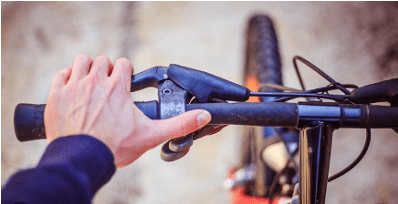
Let’s say their brain’s “brakes” aren’t ready yet. From a neuropsychological perspective, behavioral inhibition is the brake under construction and one of the most important executive functions. It consists of the ability to stop an automatic response and replace it with a more adaptive one. Thanks to this skill, we can wait our turn, control impulses, think before acting, or adjust our behavior to the needs of the situation.
This process depends mainly on the interaction between the prefrontal cortex and other brain structures related to emotion and motivation. When these connections are still maturing, or when the child is under a high level of stress, the capacity for inhibition decreases significantly. The result can be impulsive, disorganized, or seemingly defiant behavior.
Therefore, it is not always a matter of a lack of interest in doing things right. In many cases, it is simply that the control system does not yet have enough strength to curb certain impulses.
Psychological inhibition, however, holds them back too much in other areas and can contribute to a dysregulation of behavioral inhibition in others. This type of inhibition uses fear to block available resources. It arises when anxiety, insecurity, fear of making mistakes, or certain past experiences trigger defense mechanisms that limit social participation.
In these cases, the problem is not a lack of skills, but rather the difficulty in accessing them. The child may know what to say, how to resolve a conflict, or how to join a group, but fear blocks the execution of those abilities.
From neurobiology, we know that when the brain perceives a threat (real or perceived), survival-related circuits are activated, especially structures like the amygdala. When this activation is intense, cognitive resources shift toward protection, and the availability of executive functions—such as re , planning, emotional control, or complex social interaction—decreases. That is why some children seem to freeze up, avoid participating, withdraw from group activities, or display significant social rigidity. It is not that they do not want to interact. Their nervous system is prioritizing safety over exploration.
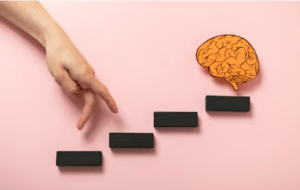
Psychological inhibition does not always manifest as shyness or withdrawal. Sometimes, the response to this blockage is disruptive behavior, which also appears, therefore, as a defensive response.
Some children respond to stress with “fight” behaviors: defiance, aggression, emotional outbursts, or highly disruptive behavior. From the outside, we observe unregulated behavior. However, on the inside, there may be an intense sense of threat, insecurity, or vulnerability.

Interpersonal neuroscience and current trauma models show us that many challenging behaviors can be understood as adaptive strategies developed by the nervous system to manage situations perceived as overwhelming.
Now, and this point is very important, this does not mean ever eliminating boundaries or justifying any behavior. It means understanding that correcting behavior will be much more effective when accompanied by opportunities to develop internal capacities that are still immature or temporarily blocked.
Validation, setting limits, consequences, and positive alternative models for future instances of the same situation, as well as corrective intervention, remain necessary actions for learning and maturation, and these must always be carried out by their primary caregivers. Other strategies will also help, such as expanding emotional vocabulary, mindfulness, social skills programs, neuromovement programs, and, above all, free play with peers.
The environment plays a fundamental role, as current research shows that self-regulation does not arise in isolation. Children initially learn to regulate themselves through co-regulation with significant adults. Before they can calm themselves on their own, they need to repeatedly experience that another adult can help them organize their emotions, put words to what they feel, and offer reassurance when difficult situations arise.
Over time, these experiences are internalized and transformed into increasingly autonomous tools for self-regulation. For this reason, the educational environment has an extraordinary influence on social and emotional development.
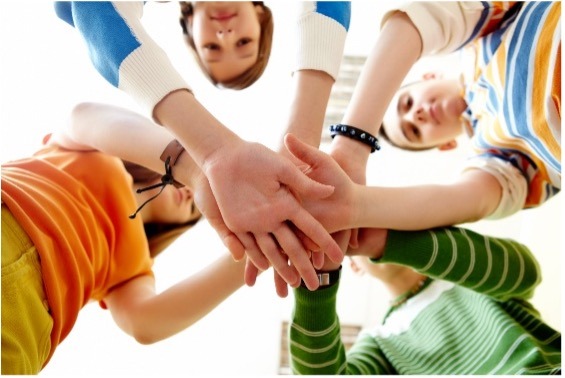
Montessori pedagogy offers particularly valuable conditions for this developmental process: a safe community where children can practice social life within a real community in every classroom.
Far from viewing discipline as a system based solely on external control, Maria Montessori proposed a prepared environment where the child can progressively build self-discipline through real and meaningful experiences.
Daily classroom life offers constant opportunities to develop social skills: taking turns, collaborating, resolving conflicts, asking for help, expressing disagreements, taking on shared responsibilities, and actively participating in a community.
All of this takes place within a context characterized by predictability, structure, respect, and trust in the child’s abilities. From a neurobiological perspective, these environments foster a sense of security that reduces defensive states and increases the availability of brain systems involved in learning, exploration, and social interaction.
When a child feels safe, understood, and accepted, the brain can devote fewer resources to protection and more to growth.
One of the functions of an adult trained in Montessori education is to serve as an emotional regulator; therefore, their role takes on fundamental importance. They do not limit themselves to correcting behaviors; rather, they observe, interpret, and seek to understand which developmental, emotional, or relational needs may be expressed through the behavior. This approach allows for intervention based on understanding rather than merely reacting.

When a child experiences social difficulties or disruptive behaviors, the goal is not merely to modify what they do, but to help them develop the internal capacities that will allow them to act differently in the future.
Respectful support, the calm presence of an adult, emotional validation, and clear, consistent boundaries are essential tools in the daily practice at EducoMontessori International School for strengthening the brain circuits involved in regulation and social competence.
When we understand how the child’s brain works, we stop asking ourselves solely why a child isn’t behaving as we expect and begin to ask what skills they need to develop in order to do so.
Behavior is no longer seen as an isolated problem but becomes a source of information about the developmental, emotional, and neurological stage each child is going through. From this perspective, education involves creating the necessary conditions for the processes of growth, regulation, and learning to unfold fully.
Because behind every behavior there is a developing child who is learning, little by little, to build the internal resources that will allow them to coexist, interact, and participate in the world with security, autonomy, and confidence.